
Someone in your house almost went down stepping out of the shower, or a doctor just told you the bathroom needs to be “grab bar ready” before your parent comes home from the hospital. Either way, you don’t have time to read a building code—you need to know exactly where the bars go and know it’s right the first time.
Quick Answer: Install grab bars wherever someone changes position while wet, seated, or off-balance—inside the shower entrance, along the tub or shower wall, and beside the toilet, mounted 33 to 36 inches above the floor and anchored into a wall stud. Outside the bathroom, add bars by the bed, at entry steps, and along dim hallways.
Table of Contents
What You Need to Know:
- Grab bars belong anywhere someone stands up, sits down, steps over a threshold, or shifts their weight—the bathroom is the start, not the whole job.
- 33 to 36 inches above the floor is the standard mounting height, measured to the top of the bar.
- Anchor into a wall stud whenever you can reach one; use anchors rated for the bar’s full weight where you can’t.
- Most bathrooms need at least two to three bars: one in the shower or tub and one by the toilet.
- Bedrooms, entryways, hallways, and stairwells are the locations people forget until after a fall, not before one.
Where to Install Grab Bars in the Bathroom
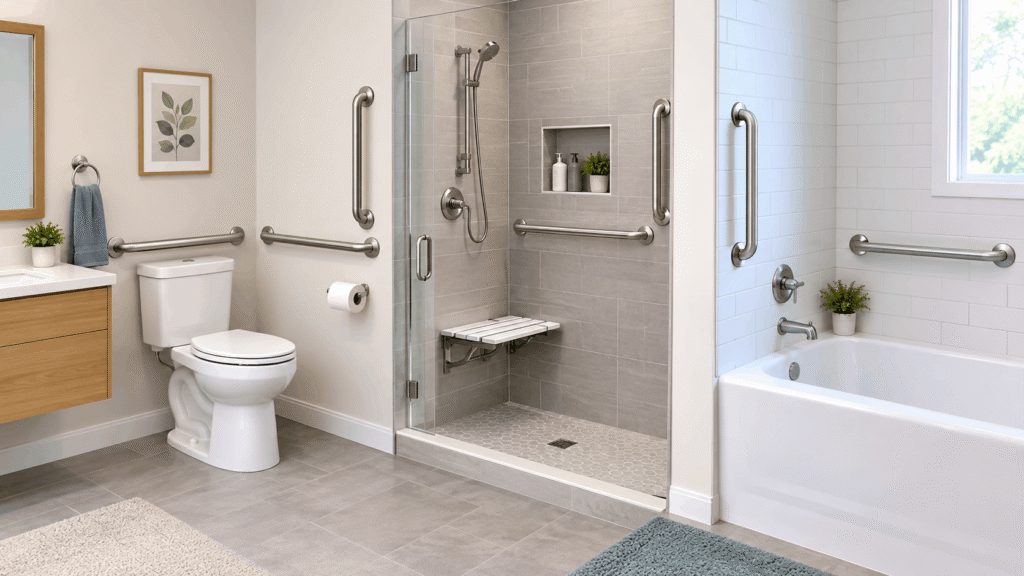
The bathroom needs bars at every point where someone loses stability while wet or seated—the shower or tub, the toilet, and sometimes the sink.
In the Shower or Tub
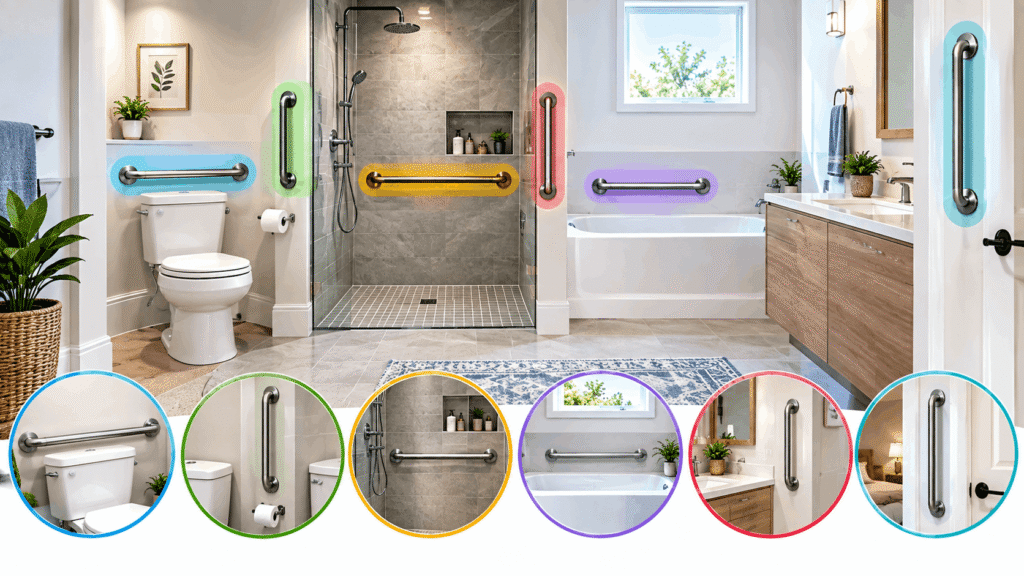
The single most useful bar goes just inside the entrance, mounted vertically, because that’s where most bathroom falls actually happen—the moment of stepping over the tub wall or shower threshold. A second, horizontal bar along the long wall of the shower gives you something to hold while standing and washing. A third bar on the back wall helps with turning around or lowering onto a shower seat.
For an exact breakdown by shower shape, see our full grab bar placement guide for showers, tubs, and toilet zones, and if you have a curbless or walk-in shower specifically, this walk-in shower placement guide covers zone-by-zone spacing.
By the Toilet
An L-shaped or straight horizontal bar on the wall beside the toilet, roughly level with the top of the tank, supports the sit-to-stand motion—the single hardest transfer for anyone with knee, hip, or balance limitations. If there’s no side wall (a common layout problem in small bathrooms), a floor-mounted swing-away bar does the same job without needing a wall at all.
By the Sink
This one gets skipped constantly. If someone leans on the counter or the pedestal to steady themselves while brushing their teeth or shaving, a short vertical bar beside the sink prevents them from grabbing a towel ring that was never built to hold body weight.
Where to Install Grab Bars Outside the Bathroom
Falls don’t stop at the bathroom door, and neither should your grab bars. According to the CDC, more than one in four older adults reports falling each year—a rate high enough that fall risk in a bedroom, hallway, or entryway deserves the same attention as the shower.
- Bedroom: A vertical bar or floor-to-ceiling pole beside the bed helps with the push-up-to-standing motion, especially for nighttime bathroom trips when a room is dark and someone is groggy.
- Hallways: A continuous handrail along a hallway that connects a bedroom to a bathroom matters most for nighttime walks, when lighting is worst and reaction time is slowest.
- Entryways: A vertical bar just inside the front door supports the step over a threshold while carrying keys, mail, or groceries—a task that combines two risk factors (an obstacle and full hands) at once.
- Stairs: A secure handrail on both sides of any staircase, not just one, cuts fall risk on the most dangerous single surface in most homes.
- Kitchen: A short bar near the sink or stove helps with long standing periods for anyone who fatigues quickly or has balance issues while cooking.
The Grab Bar Placement Map
Here’s every location in one place, organized by the task that actually requires the bar—not just the room.
Room Task That Needs Support Exact Location Mount Type Shower/Tub Stepping over the threshold Vertical bar at the entry stud, or rated anchor shower/tub Standing while washing Horizontal bar, long wall Stud, or rated anchor, shower/tub Turning or lowering to a seat Horizontal bar, back wall Stud, or rated anchor toilet Sitting down/standing up side-wall bar, tank height Stud, or rated anchor Toilet (no side wall) Sitting down / standing up Floor-mounted swing-away bar Floor bolts sink while grooming. Short vertical bar beside sink Stud, or rated anchor bedroom Getting out of bed Vertical bar or pole beside bed Stud, or rated anchor hallway Nighttime walking continuous handrail Stud, continuous blocking of entryway Stepping over a threshold Vertical bar inside the door Stud, or rated anchor, stairs climbing/descending Handrail on both sides Stud, continuous blocking kitchen Standing at sink/stove Short horizontal bar stud, or rated anchor
Save or screenshot this placement map—it covers every room in the house, not just the bathroom, so you don’t have to hunt for a second source once you’ve handled the shower.
How High Should a Grab Bar Be Mounted?
The standard reference height is 33 to 36 inches above the floor, measured to the top of the bar’s gripping surface, based on the U.S. Access Board’s ADA Standards, Chapter 6. That range isn’t a legal requirement in a private home, but it’s the tested baseline that fits most adult heights.
Exact height still shifts by fixture and by who’s using the bar—a bar for a wheelchair transfer sits differently than one for someone recovering from a hip replacement. Our full grab bar height chart breaks down the number for every fixture and body type.
How to Anchor a Grab Bar (Studs vs. No Studs)
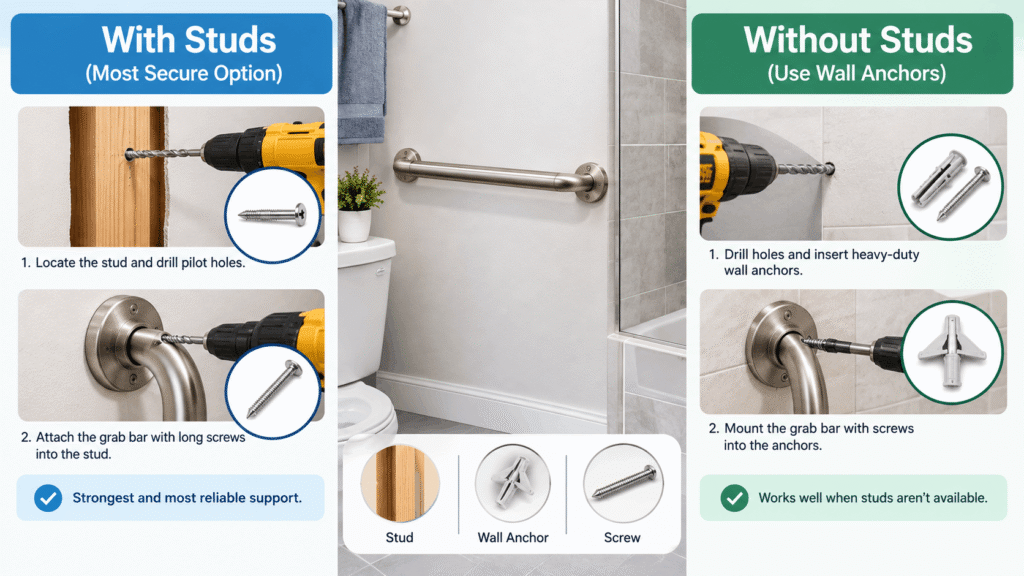
A grab bar in the wrong spot is a cosmetic mistake. A grab bar anchored into nothing but drywall is a bar that fails at the exact moment someone puts their full weight on it.
- Find the studs behind the wall first, before you decide on placement. Run a stud finder across the whole area where the bar needs to go—studs are typically spaced 16 inches apart, center to center, so you’re looking for that rhythm, not a single lucky hit.
- Mark the bar’s exact position so both mounting flanges land on a stud. If the studs don’t line up with where the bar needs to be for the person using it, shift the bar a few inches rather than mounting one end into drywall alone.
- Use anchors rated for the bar’s full load only when a stud genuinely isn’t available. Reinforced wall anchors or backing plates built for grab bars exist for exactly this situation—standard drywall anchors sold for picture frames are not the same product and are not rated for body weight.
- Test the bar by hand before anyone relies on it. Pull down and outward with real force. A bar that flexes or shifts at the wall needs to come back off and get re-anchored, not just tightened.
Where Not to Install a Grab Bar (Common Mistakes)
- Into drywall only, with no stud or rated anchor behind it. This is the single most common and most dangerous placement mistake, and it’s invisible until the bar fails.
- Replacing a towel bar in place, assuming it’s now a grab bar. Towel bars are built to hold a towel, not a person—swapping the label doesn’t change the hardware behind the wall.
- Installing just one bar and calling the room done. A single bar handles one motion; most people need support for at least two (entry and standing, or sitting and standing).
- Choosing a decorative bar with no weight rating. Modern safety-rated bars come in finishes that don’t look clinical, so there’s no reason to trade safety for style.
- Mounting a bar where it blocks the exact path someone needs to walk. A bar placed to satisfy a code minimum instead of the way a specific person actually moves through the space can create a new obstacle instead of removing one.
FAQ
Where should grab bars be installed on a wall?
Grab bars should be mounted so both ends anchor into a wall stud, typically spaced 16 inches apart. If the ideal bar position doesn’t line up with a stud, either shift the bar a few inches or use a wall anchor rated for the bar’s full weight capacity—never rely on standard drywall anchors alone.
Where should grab bars be installed in a bathroom?
Install one bar inside the shower or tub entrance, one along the shower’s long wall, and one beside the toilet at roughly tank height. A bar by the sink is worth adding if someone leans on the counter for balance while grooming.
How many grab bars does a bathroom need?
Most bathrooms need two to three bars: at least one in the shower or tub and one by the toilet. A larger walk-in shower often benefits from a third bar on the back wall for turning and repositioning.
Do grab bars need to meet ADA code in a private home?
No. ADA specifications are legally required in public and commercial facilities, not private residences. The same height and clearance numbers are still worth following because they’re the most tested reference available, but a homeowner isn’t bound to them.
Is there financial help or free installation available for seniors?
Some cities, counties, and nonprofit aging-in-place programs offer grab bar rebates or free installation for qualifying seniors, though availability varies widely by location. Check with your local Area Agency on Aging or city senior services department for programs in your specific area.
Can I install a grab bar without finding a stud?
Yes, but only with hardware built for it—a reinforced anchor or backing plate rated for the bar’s full weight, installed exactly per the anchor’s own instructions. A stud is still the stronger, more reliable option whenever the bar’s needed position allows for one.
What to Do Next
Once you know where each bar goes, the next question is almost always height and exact zone spacing for your specific shower or tub—this placement guide for showers, tubs, and toilets and our full height chart by fixture cover both in detail. If your shower is a curbless walk-in design, this walk-in shower guide is built specifically for that layout.