
What size grab bar is best for a bathroom depends on where it’s going—but if your doctor just recommended one, or someone in your family had a close call getting out of the tub, you’re standing in front of a wall of options with no idea which length to buy. You don’t need a contractor’s license to get this right—you need a few numbers.
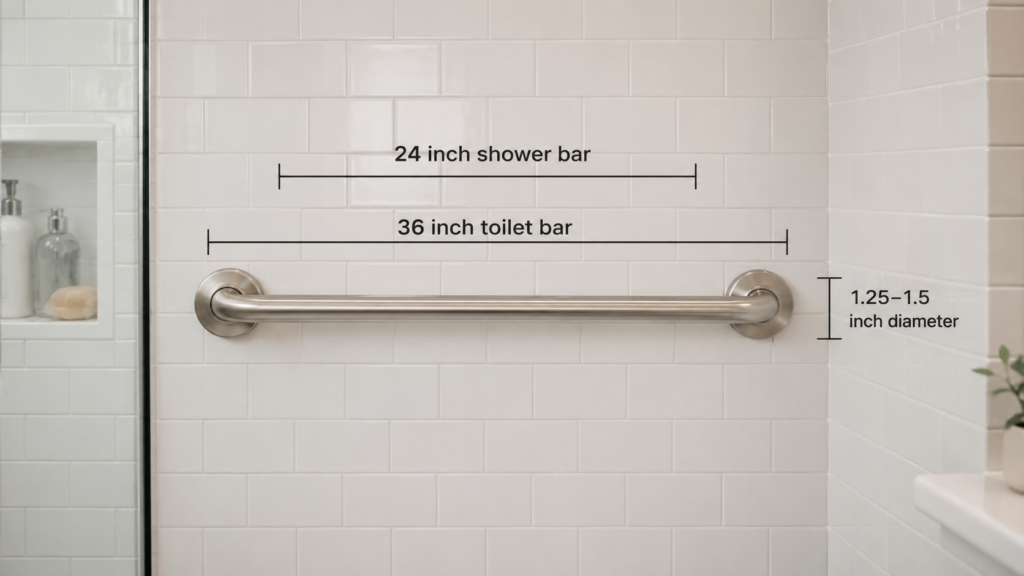
Quick Answer: The best all-around grab bar size for a home bathroom is 24 inches long with a 1¼–1½ inch diameter, the standard ADA-recommended gripping thickness. Toilet-area bars typically run 36–42 inches, shower and tub bars run 18–24 inches, and every bar should sit 33–36 inches above the finished floor.
Table of Contents
What You Need to Know
- 24 inches is the most versatile length for shower and tub walls; toilet-area bars need to be longer (36–42 inches).
- The gripping diameter—how thick the bar itself feels in your hand—should be 1¼ to 1½ inches, regardless of length.
- Grab bars mount 33 to 36 inches above the floor in almost every location.
- Size isn’t one-size-fits-all: a wheelchair user, a petite senior, and a larger-bodied adult all need different placements, even with the same-length bar.
- Every grab bar, at any size, should be rated to hold at least 250 pounds—that’s the code minimum, not a suggestion.
Grab Bar Size Chart by Bathroom Location
The answer to what size grab bar is best for a bathroom changes depending on which wall it’s going on. Different spots call for different lengths, because the job the bar is doing changes. A shower wall bar steadies you while standing; a toilet bar helps you push up from a seated position, which needs more leverage and therefore more length.
These figures follow the ADA’s Standards for Accessible Design for grab bar length, height, and clearance, adapted here for home rather than commercial use.
| Location | Recommended Length | ADA Minimum | Diameter | Height Above Floor | Best For |
|---|---|---|---|---|---|
| Shower side wall | 24″ | — | 1¼”–1½” | 33″–36″ | General standing support, most users |
| Shower back wall | 18″–24″ | — | 1¼”–1½” | 33″–36″ (or 9″ above seat) | Seated shower users, bathers with a shower seat |
| Tub back wall | 24″–36″ | 24″ min | 1¼”–1½” | 33″–36″ + second bar 8″–10″ above tub rim | Users transferring in/out of a tub |
| Toilet side wall | 42″ | 42″ min | 1¼”–1½” | 33″–36″ | Push-up leverage getting off the toilet |
| Toilet rear wall | 36″ | 36″ min | 1¼”–1½” | 33″–36″ | Stabilizing while seated |
Save or screenshot this size chart—it covers shower, tub, and toilet sizing in one place so you don’t have to re-measure or re-search mid-purchase.
Standard Grab Bar Diameter (Gripping Thickness)
A standard bathroom grab bar has a gripping diameter of 1¼ to 1½ inches, which is the range specified under ADA guidelines for accessible design. This measurement matters as much as length, because it’s what your hand actually closes around.
Here’s the detail most buying guides skip: that 1¼–1½ inch range isn’t an arbitrary code number. It’s sized so an average adult hand can fully wrap around the bar with the thumb overlapping the fingers, which is what gives you a locked grip instead of a bar you’re just resting your palm on. A bar thicker than 1½ inches forces your hand into an open grip you can’t close—which is exactly the grip that slips first in a wet bathroom.
Bars thinner than 1¼ inches, on the other hand, can be hard to grip firmly for anyone with arthritis or reduced hand strength. Stick to the standard range unless a specific medical recommendation says otherwise.
How to Choose the Right Size for a Toilet Grab Bar
Toilet-area grab bars need to be longer than shower or tub bars—42 inches on the side wall, 36 inches on the rear wall—because the movement they support is different.
Getting up from a seated position takes more leverage than steadying yourself while standing, so the side-wall bar needs enough length to let you place your hand well ahead of your hip before pushing up. A short bar next to the toilet often ends up positioned wrong—too close to your body to generate real push-up force.
Reference the chart above for exact placement: the side-wall bar should extend from 12 inches off the rear wall out to at least 54 inches, giving you a full range of hand positions as you rise.
Does Grab Bar Size Change Based on Who’s Using It?
Yes—the “best” size depends on the user’s body and mobility level, not just the location. The chart above covers general use; these adjustments cover specific situations.
For elderly or petite users
Shorter reach and reduced grip strength both favor keeping bars closer to the standard 18–24 inch range rather than sizing up, since a longer bar can put the far end out of comfortable reach. Occupational therapists commonly recommend positioning the bar’s near end close to where the hand naturally falls when the person is standing or seated in place.
For wheelchair users
A second, lower horizontal bar—typically mounted 8–10 inches above the fixture rim in addition to the standard 33–36 inch bar—supports the transfer motion of moving from a wheelchair onto a toilet or into a tub, rather than the standing-balance motion a single high bar assists.
For bariatric or larger-bodied users
Weight capacity matters more than length here. A bariatric-rated grab bar should hold significantly more than the 250-pound code minimum—many manufacturers offer 500-pound-rated bars in the same 24- to 42-inch lengths, so the size doesn’t necessarily change, but the rated capacity should.
ADA Minimum vs. What We Recommend for Home Bathrooms
The ADA minimums exist for public and commercial buildings, not private homes—but they’re still the most reliable safety benchmark available for residential installs.
According to the U.S. Access Board’s 2010 ADA Standards for Accessible Design, grab bars in public facilities must meet exact length, height, and diameter specifications by fixture type. A private homeowner isn’t legally bound by these numbers, but there’s no safety reason to go below them—the minimums reflect tested leverage and grip requirements, not bureaucratic padding. So when people ask what size grab bar is best for a bathroom at home, ADA minimums are the safest starting point even though they aren’t legally required.
Where home installs commonly differ from code: residential bathrooms often add a second or angled bar for comfort and multi-user flexibility, something ADA doesn’t require but occupational therapists frequently recommend for aging-in-place bathrooms.
Common Grab Bar Sizing Mistakes
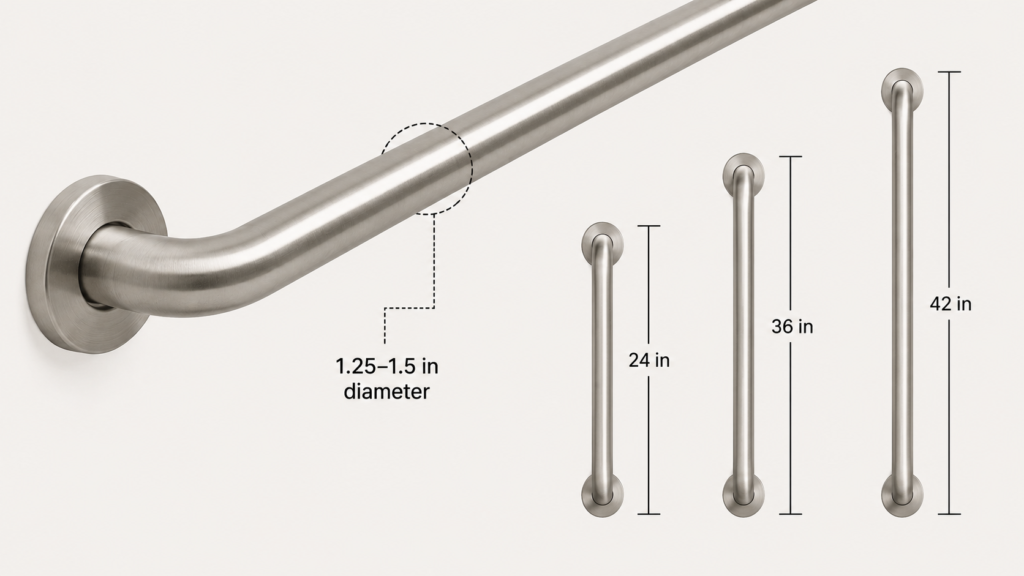
The most frequent sizing mistake is buying a bar that’s too short for its location, especially near the toilet, where a 24-inch bar sized for shower use gets installed out of habit instead of the 36–42-inch bar the location actually needs. Getting this wrong is the single biggest reason people end up researching what size grab bar is best for a bathroom after their first purchase doesn’t fit.
A few other sizing errors worth watching for:
- Matching diameter to the wrong hand: A single household with both a large-handed adult and a smaller elderly user may need two bar diameters, not one universal size.
- Ignoring wall space before ordering: A 36-inch bar doesn’t fit every wall—measure the actual mounting surface, not just the fixture-recommended length, before buying.
- Assuming all bars in a bathroom need the same length: Shower, tub, and toilet bars serve different motions, so a single “one size for the whole bathroom” purchase almost always undersizes at least one location.
Where Should Grab Bars Be Placed?
Placement and size work together—a correctly sized bar mounted in the wrong spot won’t do its job. Shower and tub bars generally go on the wall nearest the entry and exit points, while toilet bars mount beside and behind the fixture at the heights in the chart above.
For exact placement measurements, wall positioning by shower type, and stud-finding guidance, see our full breakdown: where grab bars should be placed in a bathroom.
How Much Weight Should It Hold?
Size and weight capacity are related but separate decisions—a correctly sized bar still needs to be rated for the user’s full body weight plus the dynamic force of a fall or sudden grab, not just static standing weight.
For the full weight-rating breakdown, including how capacity changes with mounting method and bar material, see how much weight bathroom grab bars can hold.
Get the Free Grab Bar Sizing Cheat Sheet
If you’re outfitting more than one bathroom or shopping for a parent’s home, keeping the shower, tub, and toilet numbers straight gets confusing fast—grab the free printable version of the size chart above and you’ll have every measurement on hand before you’re standing in a store aisle.
FAQ
What are the common grab bar installation mistakes?
The most common installation mistake is mounting into drywall alone instead of a wall stud—grab bars need to be anchored into solid framing to hold real body weight. Other frequent errors include mounting at inconsistent heights when installing multiple bars and choosing a length too short for the intended location, particularly near the toilet.
What is the standard diameter of a bathroom grab bar?
The standard diameter for a bathroom grab bar’s gripping surface is 1¼ to 1½ inches, per ADA design guidelines. This range lets an average adult hand fully close around the bar for a secure grip, rather than resting on top of it. Bars outside this range are harder to grip firmly, especially with wet or arthritic hands.
How do I choose the right grab bar for a toilet?
Choose a 42-inch bar for the toilet’s side wall and a 36-inch bar for the rear wall, both mounted 33–36 inches above the floor. The side-wall bar needs the extra length to provide leverage for pushing up from a seated position, unlike shorter shower-wall bars that only need to support standing balance.
Where should grab bars be placed in a bathroom?
Grab bars go wherever a user transitions between standing, sitting, or stepping—inside the shower or tub near the entry point and beside and behind the toilet. Height stays consistent at 33–36 inches above the floor across all locations. See our full placement guide for wall-by-wall measurements.
Does a longer grab bar mean it’s safer?
Not automatically. A bar longer than the location calls for can end up partially out of comfortable reach, which does nothing for safety and can even encourage an awkward reach that increases fall risk. Choose the length based on the fixture and the user’s reach, rather than assuming “bigger means safer.”
Is the grab bar size different for a wheelchair user?
The standard high bar (33–36 inches up) still applies, but wheelchair users typically also need a second, lower bar mounted 8–10 inches above the tub or toilet rim to support the sideways transfer motion. Length and diameter recommendations stay the same—it’s the number and placement of bars that change.
What to Do Next
Once you’ve settled on sizes, two things matter next: making sure each bar is rated to hold the weight it needs to and getting the placement exactly right so the size you bought actually does its job.
- Check how much weight bathroom grab bars can hold before you buy, so size and weight rating are chosen together.
- Confirm exact wall positioning with where grab bars should be placed in a bathroom.
- [CONTENT GAP: A buying guide covering specific grab bar picks by size doesn’t exist yet on bathreviewhub.com—this is the natural next page to build and link here.]
If you’re not confident about wall framing or load capacity for a specific installation, a licensed contractor or an occupational therapist familiar with the user’s needs can confirm the right setup before anything gets drilled.