
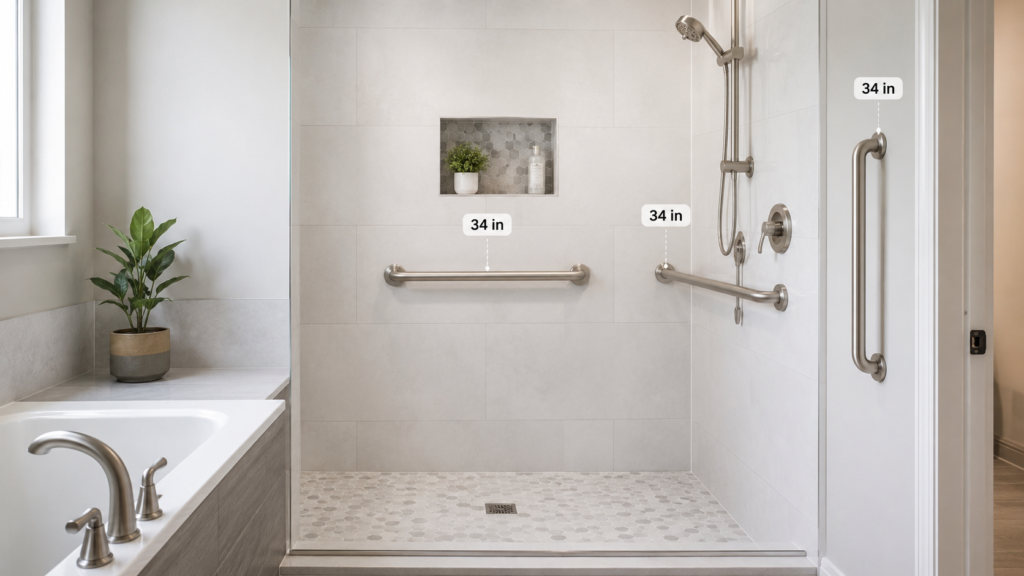
Where should grab bars be placed in a bathroom? That’s exactly what you’re trying to figure out right now — maybe after a close call in the shower, maybe because a parent is moving in, maybe because a doctor just said the word “fall risk” out loud. You don’t need a design lecture. You need to know exactly where the drill goes, and at what height.
What Is the Ideal Location for Grab Bars in a Bathroom?
Quick Answer: Grab bars go in three core zones: beside the toilet (33–36 inches high, 42-inch bar), inside the shower or tub on the back and control wall (33–36 inches high), and vertically at the shower or tub entry for step-in support. Exact placement should still account for the user’s height and reach.
Table of Contents
What You Need to Know
- Three zones cover most bathrooms: toilet, shower/tub interior, and the shower/tub entry point.
- 33 to 36 inches from the floor is the standard height for horizontal bars, based on the ADA’s 2010 Standards for Accessible Design.
- Vertical bars at entry points run roughly 33 to 48 inches, sized to where the hand naturally reaches while stepping over a threshold.
- Grab bars must anchor into wall studs or engineered blocking—drywall alone will not hold body weight.
- ADA numbers are a legal requirement for public bathrooms, not your house. At home, they’re a reliable starting point you can adjust.
The 3 Grab Bar Zones in Every Bathroom
Bathroom accidents occur most often in three key areas, making those the ideal places for grab bars. Getting the zones right matters more than getting every inch perfect.
Toilet Area
Install a horizontal bar on the wall beside the toilet, roughly 33 to 36 inches above the floor. A 42-inch grab bar installed with its beginning roughly 12 inches from the rear wall provides steady support during the entire sit-to-stand movement, instead of only the last upward push.
Some bathrooms add a second, shorter bar on the wall behind the toilet—useful if the person needs support while seated, not just when rising.
Shower or Tub
Two bars do most of the work here: one on the back wall at 33 to 36 inches for standing support, and one near the shower controls at the same height so the user isn’t reaching across a wet, soapy body to adjust water temperature.
The back-wall bar matters more than most people expect—it’s the one that catches a slip mid-shower, not just at entry or exit.
Shower or Tub Entry Point
A vertical bar at the entry gives something to hold while lifting a leg over a tub wall or stepping through a shower threshold — the single highest-risk moment in the whole routine. Mount it so the top sits around chest height for the primary user, generally in the 33 to 48-inch range.
Grab Bar Height and Placement Reference Table
| Zone | Bar Orientation | Height From Floor | Bar Length | Notes |
|---|---|---|---|---|
| Toilet, side wall | Horizontal | 33–36″ | 42″ | Start ~12″ from back wall |
| Toilet, rear wall (optional) | Horizontal | 33–36″ | 24–36″ | Centered behind toilet |
| Shower/tub, back wall | Horizontal | 33–36″ | 24–36″ | Primary standing support |
| Shower/tub, control wall | Horizontal or angled | 33–36″ | 18–24″ | Near faucet/controls |
| Shower/tub entry | Vertical | 33–48″ (grip zone) | 18–24″ | At threshold or tub edge |
Please save or screenshot this reference table — it provides a comprehensive overview of every zone at a glance, eliminating the need to scroll back through the article during installation.
Horizontal, Vertical, or Angled — Which Orientation Where?
A horizontal grab bar provides steady support while remaining upright, whereas a vertical grab bar assists with the lifting and lowering movement involved in sitting and standing. Pick based on the movement happening at that spot, not personal preference alone.
- Horizontal: shower back wall, control wall, beside the toilet—anywhere someone braces while stationary.
- Vertical: shower/tub entry, next to a toilet for extra push-off leverage—anywhere someone transitions between sitting/standing or stepping over a threshold.
- Angled (diagonal): a hybrid option near a shower seat or tub edge, comfortable for users whose grip strength or wrist mobility varies. It’s often the most forgiving single-bar choice when only one is being installed in a tight space.
For toilet-area bars specifically, horizontal is the standard recommendation—it matches the sit-to-stand motion directly, while a vertical bar there mostly helps with the final push-off rather than the whole movement.
ADA Guidelines vs. Home Best Practice — What’s Actually Required?
The ADA’s grab bar measurements are a legal requirement for public and commercial restrooms—not for private homes. This distinction: companies selling installation services often blur this distinction. This distinction is often blurred by companies that sell installation services.
According to the ADA’s 2010 Standards for Accessible Design, Section 609 sets the 33–36 inch height range, a minimum 1.5-inch clearance between bar and wall, and a 250-pound minimum weight rating for compliant installations.
At home, none of that is legally mandated—but it’s still the most tested, most studied set of numbers available, which is why installers and occupational therapists use it as the default. Deviating from it should be a deliberate choice based on the actual user’s height and reach, not a guess.
How Many Safety Grab Bars Should a Bathroom Have?
Most bathrooms need a minimum of three: one beside the toilet, one inside the shower or tub, and one at the entry point. Bathrooms with a shower seat, a second toilet-side bar, or a sink-adjacent bar for balance during transfers may need four or five, depending on the user’s mobility level and how far they have to move unsupported between fixtures.
Revisiting where grab bars should be placed in a bathroom for a specific household usually comes down to reach distance and daily routine, not a fixed rule everyone follows.
Most bathrooms need a minimum of three: one beside the toilet, one inside the shower or tub, and one at the entry point. Bathrooms with a shower seat, a second toilet-side bar, or a sink-adjacent bar for balance during transfers may need four or five, depending on the user’s mobility level and how far they have to move unsupported between fixtures.
Revisiting where grab bars should be placed in a bathroom for a specific household usually comes down to reach distance and daily routine, not a fixed rule everyone follows.
Common Grab Bar Placement Mistakes
The single most common mistake is mounting into drywall or tile alone instead of a wall stud — a bar that isn’t anchored into structural framing can fail under real body weight, even if it holds fine in a quick test.
Other frequent errors:
- Height guessing instead of measuring—bars installed “by eye” often land too high for shorter users or too low for taller ones.
- Using a towel bar as a grab bar—towel bars aren’t rated for body weight and can snap off the wall mid-fall.
- Skipping the second bar—a single-entry bar without a standing-support bar inside the shower leaves the highest-frequency risk zone (mid-shower slips) uncovered.
- Ignoring reach distance—a bar mounted correctly by height but too far to reach in a moment of loss of balance provides no real protection.
Falls remain a leading cause of injury-related hospitalization among older adults, according to the CDC’s Older Adult Fall Prevention program — which is exactly why placement precision matters more here than in most home improvement projects.
Getting where the grab bars should be placed in a bathroom wrong on any one of these points is what turns a “just in case” installation into one that fails when it’s actually needed.
Must Grab Bars Be Mounted Into Wall Studs?
Yes. A grab bar has to anchor into a wall stud or added blocking to safely support body weight—wall studs are the vertical framing members inside the wall, typically spaced 16 inches apart. Where studs don’t line up with the ideal placement, a contractor can add blocking (a solid wood or engineered support) behind the wall surface to create a secure anchor point at the exact spot needed.
This is one of the most overlooked parts of where to grab bars: be placed in a bathroom—the wall behind the tile matters just as much as the height on the tape measure.
When to Call a Professional Installer
A stud finder and a level can get a confident DIYer through a straightforward install. Where it gets riskier: tile walls (drilling risks cracking without the right bit and technique), fiberglass tub surrounds (often hollow behind the surface, needing blocking), and any situation where studs don’t align with where the bar needs to go for the user’s actual height and reach. When any of those apply, a professional installer is worth the cost—a grab bar that fails is worse than no grab bar at all.
A professional can also confirm where grab bars should be placed in a bathroom when tile, fiberglass, or unusual framing makes DIY measuring unreliable.
Choosing Grab Bars for Your Bathroom
Once the placement is mapped out, the next decision is which bars to actually buy—material, length, and weight rating all vary more than people expect, and the wrong choice undercuts even perfect placement. Our guide to the best grab bars for showers and tubs breaks down the options by bathroom type and budget. (Guide in progress — check back soon.)
Frequently Asked Questions
Here are the most common questions people ask about where should grab bars be placed in a bathroom, answered directly.
What are the most common grab bar installation mistakes?
The biggest one is anchoring into drywall or tile instead of a wall stud, which can cause the bar to fail under real weight. Other frequent errors include guessing at height instead of measuring for the actual user, using a towel bar in place of a rated grab bar, and skipping the shower’s mid-wall bar in favor of only an entry bar.
How Many Grab Bars Are Recommended for a Bathroom?
Most bathrooms need at least three: one beside the toilet, one on the shower or tub’s back wall, and one vertical bar at the shower or tub entry. Bathrooms serving users with higher mobility needs — a shower seat, longer unsupported walking distances — often benefit from four or five bars total.
Should toilet grab bars be horizontal or vertical?
Horizontal is the standard recommendation for toilet-area bars because it matches the full sit-to-stand motion, not just the final push. A 42-inch horizontal bar on the side wall, mounted 33 to 36 inches high, is the most common configuration. A vertical bar can be added for extra push-off leverage but isn’t a substitute.
What are the rules for grab bars in showers?
For legally regulated public restrooms, the ADA requires grab bars mounted 33 to 36 inches high, rated to hold at least 250 pounds, with 1.5 inches of clearance from the wall. Private homes aren’t legally bound by these numbers, but they’re the most tested standard available and are widely used as the default for residential installs.
Do grab bars need to be installed into wall studs?
Yes. Grab bars need to anchor into a wall stud or added blocking behind the wall surface to safely bear body weight. Drywall anchors alone aren’t rated for the load a person puts on a bar during a fall or a loss of balance, which is the exact moment the bar needs to hold.
Where should grab bars be placed in a bathroom for maximum safety?
For maximum safety, grab bars should cover all three high-risk zones — beside the toilet, inside the shower or tub, and at the entry point — rather than just one. A single bar reduces risk in one spot but leaves the other transition points unsupported.
How high should a grab bar be mounted in a bathroom?
Horizontal grab bars are typically mounted 33 to 36 inches above the floor, based on ADA guidelines. Vertical bars at shower or tub entries run a bit higher, generally in the 33 to 48-inch range, sized to where the hand naturally falls while stepping over a threshold.
What to Do Next
Placement is step one — the bars themselves need to match the job. Once you’ve mapped out your zones, the next step is choosing bars rated for the task; browse our full bathroom safety gear reviews at Bath Review Hub for material, length, and weight-rating comparisons. If you’re planning a full accessibility retrofit rather than a single install, our upcoming DIY vs. professional grab bar installation guide will help you decide where to draw that line. (That guide is in progress — [CONTENT GAP].)
Whatever the layout of your bathroom, the answer to where should grab bars be placed in a bathroom always comes back to the same three zones — toilet, shower or tub, and the entry point.