
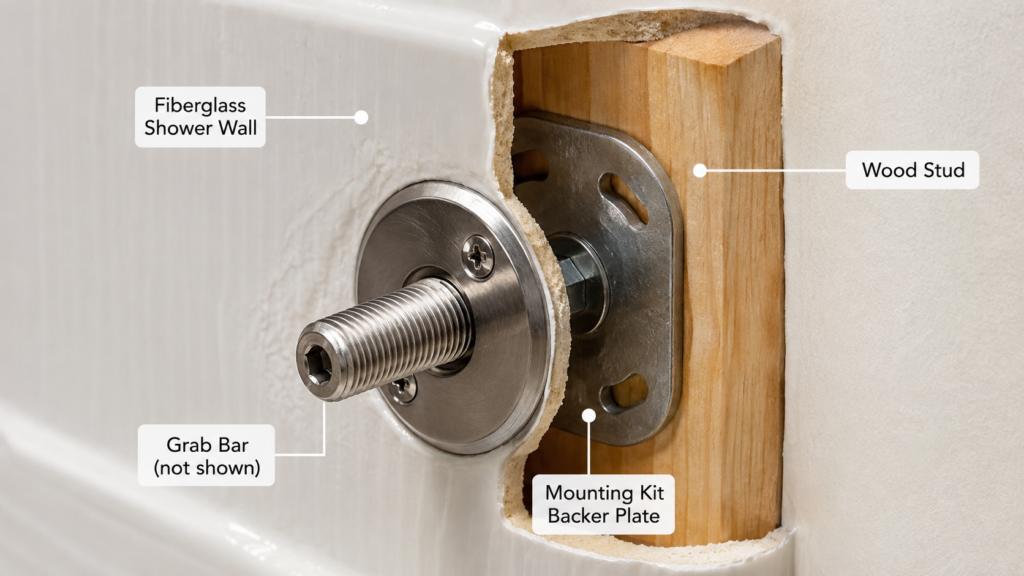
A grab bar for fiberglass shower walls needs different hardware than one going into tile or drywall, and you probably just found that out the hard way — the anchor spun uselessly in the hole instead of biting into anything solid. That doesn’t mean you made a mistake. Fiberglass simply isn’t built to take a drilled anchor the same way a solid wall is. Here’s exactly what does work.
Quick Answer: Yes, you can install a grab bar for a fiberglass shower, but not with standard wall anchors. You need either a bar mounted directly into the wood studs behind the fiberglass, or a mounting-kit/backer-plate system designed to spread the load across the panel when a stud isn’t available where you need it.
Table of Contents
What You Need to Know
- Standard toggle bolts and plastic anchors fail in fiberglass because the panel flexes under sideways pull — it’s not a rigid surface like drywall.
- The two real options are stud-mounted bars and mounting-kit systems that use a backer plate behind the fiberglass.
- Suction-cup and adhesive grab bars are not a safe substitute for a mobility aid — they can release under load.
- Drilling into fiberglass is manageable as a DIY project if you can locate studs and seal the hole properly, but it’s not a “no tools, no risk” job.
- Placement height and weight capacity depend on who’s using the bar — those are separate decisions from which mounting method you choose.
Why Standard Wall Anchors Don’t Work on Fiberglass
Fiberglass shower panels are generally thin, gel-coated composite shells, with a hollow space or foam backing behind them instead of solid support. A grab bar has to resist lateral pull-out force, not just hold static weight, and a plastic or toggle anchor sunk into that thin shell simply flexes and pulls free under that kind of load. This is the same reason a grab bar that feels solid when you first tap it can still fail months later — the anchor was never gripping anything rigid to begin with.
Any grab bar for a fiberglass shower has to meet the same structural bar as one going into tile: the U.S. Access Board’s bathing room guidelines require grab bars and their mounting hardware to withstand 250 pounds of force at any point without failing. A weak anchor in fiberglass simply can’t clear that bar, no matter how solid the grab bar itself is.
Two Methods That Actually Hold
Mounting Into Wall Studs
If a stud lines up where you need the bar, this is the strongest and cheapest option. Standard lag bolts driven through the fiberglass into the stud behind it can meet or exceed ADA and ANSI structural requirements, which call for grab bar mounting hardware to withstand roughly 250 pounds of force. The catch is that studs are typically spaced 16 inches apart, so your ideal grab bar placement and your available stud may not line up.
Mounting-Kit or Backer-Plate Systems
When a stud isn’t where you need it, a mounting kit solves the problem by installing a plate or threaded mounting assembly through the fiberglass that grips the stud from a slight offset, or spreads the load across a reinforced anchor point. These kits typically include mounting plates, threaded shafts, lag bolts, and self-tapping screws, and installation generally takes about an hour once the hole is cut and sealed.
Which Method Fits Your Situation
| Your Situation | Recommended Method | Why | Reversible? |
|---|---|---|---|
| Bar location lands directly on a stud | Direct stud mounting | Strongest, cheapest, fewest parts | No — leaves holes if removed |
| Bar location falls between studs | Mounting-kit/backer-plate system | Distributes load without needing a stud | No — same as above |
| Renting or can’t drill into the wall | No-drill tension pole or wall-to-floor bar | Avoids permanent holes entirely | Yes |
| Temporary need only (e.g., recovering from surgery) | No-drill or clamp-style bar, professionally rated only | Easy removal when no longer needed | Yes |
Save or screenshot this mounting-method table — it covers the decision most people get stuck on before they’ve even bought a bar.
Do Suction or Adhesive Grab Bars Work on Fiberglass Showers?
No. Suction and adhesive grab bars are not a safe substitute for a properly mounted bar. Suction cups can release without warning as the seal weakens from soap film, temperature changes, or an uneven fiberglass surface, which is exactly the moment someone is putting their full weight on the bar. They may work for light towel-hanging use, but they shouldn’t be relied on as a fall-prevention or mobility aid.
Is There a No-Drill Grab Bar for a Fiberglass Shower?
Yes, but with real limits. Freestanding tension poles (floor-to-ceiling) and clamp-style bars that attach to the tub wall lip can provide support without drilling into the fiberglass at all. These work best as a temporary or rental-friendly solution — they generally aren’t rated for the same weight capacity as a properly mounted, drilled-in bar, so check the manufacturer’s load rating before relying on one.
How to Install a Fiberglass-Mounted Grab Bar: Step by Step
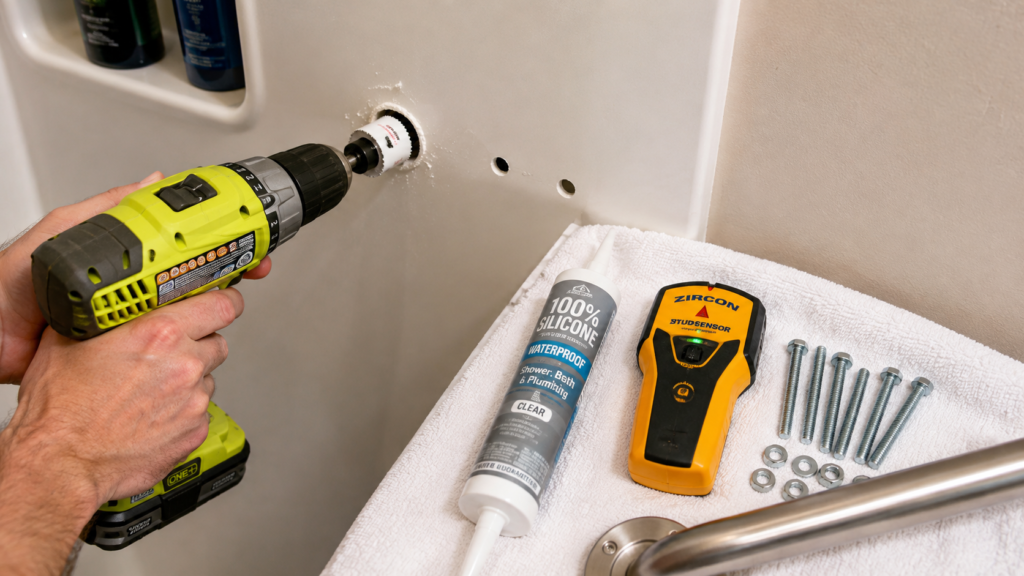
- Find the studs behind the shower wall. Use a stud finder from outside the shower where possible, or check the framing from an adjoining closet or attic access if the layout allows it. Studs are typically 16 inches on-center.
- Mark your bar height and confirm stud alignment. Standard grab bar placement is 33–36 inches above the floor, but confirm this against your own placement research before drilling anything.
- Cut the mounting hole. A mounting-kit system typically requires a 2-inch hole saw cut through the fiberglass at each mounting point.
- Install the backer plate or lag bolt into the stud. Tighten to the manufacturer’s specified torque—overtightening can crack the gel coat.
- Seal the hole with waterproof silicone caulk before attaching the grab bar itself, so water can’t wick behind the fiberglass panel.
- Attach the grab bar to the mounting plate or lag bolts and test it by applying firm downward and lateral pressure before trusting it with full body weight.
Getting the Height and Placement Right
The mounting method is only half the job—where the bar goes matters just as much for it to actually help. If you haven’t nailed down the right height yet, see our guide on the correct height for a shower grab bar, and for full-bathroom placement beyond just the shower, check our grab bar placement guide.
How Much Weight Does It Need to Hold?
The mounting method has to match the load it’s expected to carry—a bar that meets minimum code requirements isn’t automatically rated for every user. Our breakdown of grab bar weight capacity walks through what to check before you buy.
This isn’t a minor detail. According to the CDC, falls are the leading cause of injury among older adults, which is exactly why a properly mounted grab bar for a fiberglass shower matters more than it might seem for a “small” bathroom upgrade.
Want the printable version of the stud-finding and mounting checklist above so you’re not scrolling back to this page mid-install? It’s part of our free bathroom-safety planning kit—worth grabbing before you pick up the drill.
Common Mistakes People Make
- Skipping the stud finder and hoping for the best. Guessing at the stud location is the single most common cause of a bar that fails months later.
- Overtightening lag bolts. Fiberglass gel coat can crack under excess torque, creating a leak path even if the bar itself holds.
- Skipping the caulk seal. An unsealed mounting hole lets water migrate behind the fiberglass panel, leading to hidden rot in the wall framing over time.
- Trusting a suction bar as a permanent fall-prevention fixture. It’s a convenience item, not a mobility aid.
When to Call a Professional Instead
If you can’t confirm where the studs are—common in finished basements, older homes with unusual framing, or fiberglass surrounds without attic or closet access—this isn’t a good project to guess your way through. A licensed contractor or an occupational therapist familiar with home mobility modifications can confirm both the structural mounting point and the correct placement for the specific person using the bar.
FAQ
Can a grab bar be put in a fiberglass shower?
Yes. Fiberglass shower walls can support a properly installed grab bar, but only when it’s mounted into a wall stud or installed with a mounting-kit system designed for fiberglass. Standard wall anchors alone aren’t strong enough because the panel flexes under lateral force.
Can you put a handrail in a fiberglass shower?
“Yes—”handrail” and “grab bar” are often used interchangeably for bathroom safety bars, and the same mounting rules apply. It needs to reach a wall stud directly or use a backer-plate mounting kit; a handrail mounted only into the fiberglass shell without stud support won’t hold up under real weight.
Is there a no-drill grab bar for a fiberglass shower?
Yes, but options are limited to freestanding tension poles and clamp-style bars that attach to the tub edge rather than the wall itself. These avoid drilling entirely but typically carry lower weight ratings than a properly mounted, drilled-in bar, so they’re best for temporary or rental situations.
Do suction grab bars work on fiberglass showers?
No, not reliably. Suction grab bars can lose their seal from soap residue, temperature shifts, or a slightly uneven fiberglass surface, and that failure often happens exactly when someone puts their full weight on the bar. They aren’t a safe substitute for a permanently mounted grab bar.
Will drilling into a fiberglass shower void the warranty?
It depends on the manufacturer and how the shower was installed, so check your specific warranty documentation before drilling. Some manufacturers exclude damage from aftermarket modifications, which is one more reason to seal the mounting hole properly and follow the kit manufacturer’s instructions exactly.
Can you patch or seal the hole after drilling into fiberglass?
Yes—waterproof silicone caulk applied around the mounting hardware before attaching the grab bar is the standard approach, and it’s a required step, not an optional one. Without it, water can migrate behind the fiberglass panel and cause hidden damage to the wall framing.
What to Do Next
Once your mounting method is settled, the next decisions are height and weight capacity—get those wrong, and even a rock-solid mount won’t actually help the person using it. Start with the right height for a shower grab bar, confirm full bathroom placement, and check how much weight your setup needs to support before you buy a bar.